Cafelat Buy

No pump. No boiler. Real espresso.

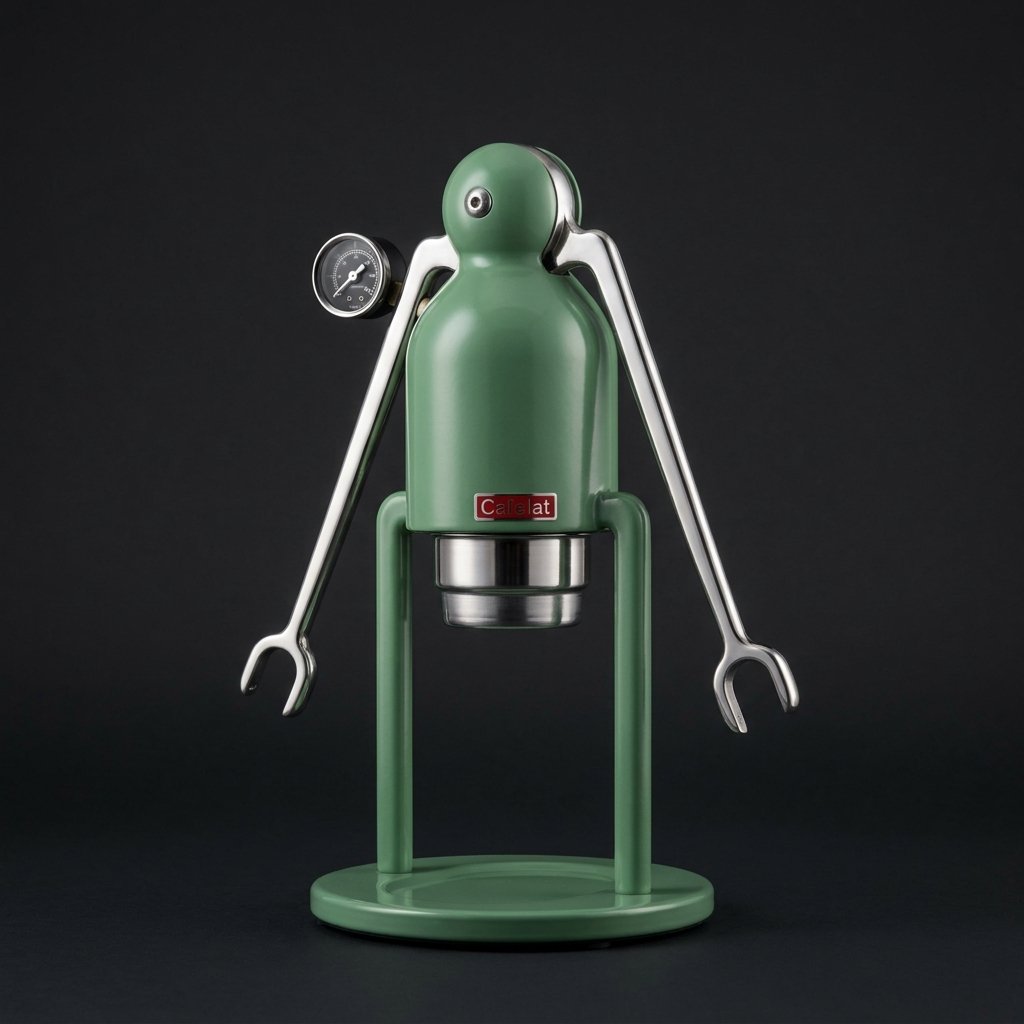
The Cafelat Robot is a manual lever espresso maker. Aluminium body, stainless steel everywhere else, an FDA-approved silicone piston seal, and nothing else inside it. 2.8 kg. Completely plastic free. Six to seven bar, by hand.

How the Robot pulls a shot

No pump. No boiler. No electronics.

Hot water from your kettle, straight into a 58 mm basket.

The basket is the brewing chamber. Water off the boil settles to about 95 °C.

Press the arms down. The piston does what a pump would do.

Six to seven bar — where lever machines actually extract.

32 g out of 16 g in. Real espresso.

Extraction pressure
6–7 bar
Water into the basket
95 °C
Weight, with the tamper
2.8 kg

Specification

Every figure below is Cafelat's own. The Robot has no heating element and no pump, so two of them — water temperature and extraction pressure — depend on what you do with it, and both are given as the range the machine actually works in rather than as a single flattering number.

Brewing
Filter basket58 mm, the same size as professional semi-automatic machines
Baskets suppliedProfessional basket for fresh ground coffee; pressurised double-wall basket for pre-ground
PortafilterBottomless, with spouts available
Extraction pressure6–7 bar recommended; 8 bar maximum
Water into the basketAbout 95 °C, from water just off the boil
Coffee out of the basketUp to 88 °C
Ratio16 g in to 32 g out, extending to 40–45 g
Pressure gaugeReads from inside the basket. Barista model only
Materials and build
Body and basesAluminium
All other partsStainless steel
Piston sealFDA-approved silicone
Plastic contentNone
TamperOne-piece stainless steel, tapered walls, machined to the basket
WeightApprox. 2.8 kg (6.2 lb), including the tamper
ProtectionDesign registered. The Barista version is patent pending

Colours

The body is powder-coated over aluminium. The arms, basket and tamper are polished stainless steel on every one of them.

Availability changes. The current list is on the store. See what is in stock.

In the box

Pressing it safely

Work in the 5 to 8 bar range. It is tempting to max the gauge out; do not. Cafelat routinely test the machine well past 14 bar, but only for a moment, and while the stainless arms will take whatever you give them, the body is aluminium and you risk breaking it.

Without a gauge, put a bathroom scale under the machine and pull a shot. 18 kg (40 lb) on the scale is roughly 7 to 8 bar, and that is as hard as you should press.

Press the arms straight down, evenly, with both hands. Do not squeeze the arms against the legs for extra leverage — that is what breaks machines.

Who made it

Paul Pratt started as a barista in 1995, opened his first retail stores in 1997 at 23, began importing La Marzocco into Hong Kong and Macau a year later, and built a roasting facility in 2003. He is best known in the trade for machine maintenance and for training La Marzocco technicians.

He owns around thirty espresso machines, most of them La Marzocco, dating from the 1950s to the present, and rebuilds each one using as much of the original machine as possible — down to refurbishing the factory screws. The 6 to 7 bar figure on this page comes from measuring traditional lever machines in that collection.

The Robot was drawn by Karina Mencke, a designer based in Copenhagen, who has designed every Cafelat product since the company started in 2008.

See the collection
Pull it yourself.